The useful bit, first
- Keep the items used daily in small, recognizable groups rather than storing every reserve in the bathroom.
- Match hooks and caddies to their intended wet-area use, surface, and load.
- Give used towels a drying location separate from the clean supply.
A small bathroom feels crowded quickly because so many tasks share one room. Washing, getting ready, showering, drying towels, and cleaning all bring their own objects. The easiest storage plan is not the one that squeezes the most into the room. It is the one that gives daily routines enough room to happen.
Imagine an ordinary morning with another person waiting to use the space. Which items do you need immediately? Which cupboard can you open without blocking the door? Which objects could reasonably live elsewhere? Start with that sequence and let the storage follow it.
Separate daily products from the rest
List the personal products and tools used each day. Keep that active group modest and identifiable. Occasional styling equipment, reserve packages, travel supplies, and guest items do not necessarily need the most convenient bathroom space.
A shelf or drawer near the usual getting-ready position can hold the active group when conditions suit the products. Keep packaging information and follow the manufacturer's storage directions. Do not transfer every product into a matching container just to make the shelf consistent.
For a shared bathroom, divide by routine or by person where helpful. Two small individual containers may prevent a mixed drawer from becoming difficult to use. Shared items can have a separate place. Choose distinctions that make sense to the household rather than adding labels that no one will read.
Understand which areas stay wet
The shower, sink edge, and a shelf close to splashing have different conditions from a dry cupboard. Choose storage and products suitable for their actual location. A material described as attractive or removable is not automatically appropriate for regular wet exposure.
Keep items that need dry conditions in an appropriate dry location, even if that location is outside the bathroom. Avoid filling every ledge inside the shower with products used only occasionally. Fewer active packages make it easier to see what belongs there and to maintain the surface beneath.
Do not use storage to hide persistent dampness or a leak. EPA's moisture guidance emphasizes addressing water problems and appropriate ventilation. Report or arrange the relevant maintenance instead of packing the affected corner with baskets. The condition of the room comes before the arrangement of its contents.
Make the sink area easy to use and clean
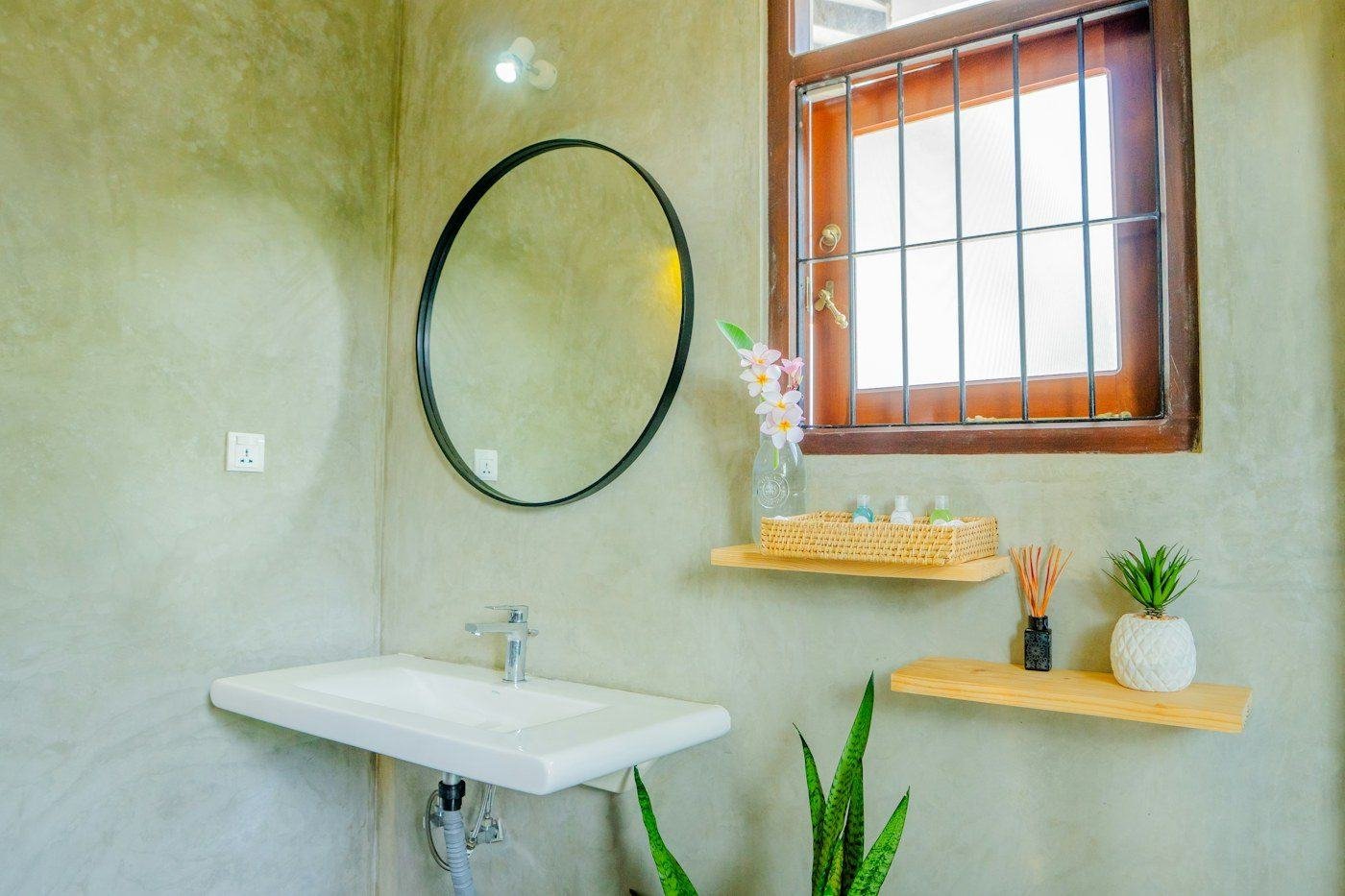
Reserve enough clear surface for the actions performed at the sink. A small removable tray can group appropriate daily products, but check whether it genuinely saves space or merely adds another layer. The tray should lift out easily so the counter can be cleaned according to its care needs.
Choose storage that does not obstruct the tap, basin, mirror, door, or any required access. Check the full object size. A tall bottle or wall caddy may interfere with the mirror cabinet even if it fits neatly beside the basin.
When counter space is extremely limited, move part of the active kit to an accessible drawer or nearby cabinet. The items can come out for use and return afterward. This works best with a small manageable group, not a large basket that has nowhere to sit once removed.
Use drawers and cupboards with clear boundaries
Measure the usable interior and note hinges, pipes, or other obstructions. Small dividers can keep personal items recognizable without making the entire drawer into a fixed grid. Leave room for fingers and for package sizes that vary between purchases.
Under-sink storage should allow maintenance access and should not conceal dampness. If household cleaning products live there, keep original labels, follow their directions, and use secure storage appropriate for children and pets. Keep them separate from personal supplies and clean towels.
A suitable removable bin may help a deep cupboard become usable, but it has to come out through the opening. Test with an existing container before buying. Check the full movement with the bathroom door open and closed, especially if the cabinet faces a narrow walkway.
Choose shower caddies and hooks by product details
A shower caddy should suit its support, material, and intended load. Read the fitting directions rather than assuming every hanger can go over any fitting. Avoid adding weight to a fitting that is not intended to carry it. Tension and suction designs also depend on specific conditions and require their own instructions.
For adhesive storage, choose a product explicitly intended for the proposed location and surface. 3M lists dedicated bath products with water-resistant strips, while its instructions identify incompatible surfaces and preparation requirements. Those claims apply to the particular product and conditions, not to all adhesive hooks.
Check these details before placing a product:
- Its intended indoor, wet-area, or shower use.
- The surfaces named as compatible on the package.
- The permitted load and the full weight of the planned contents.
- The fitting, waiting, care, and removal instructions.
Permission and surface condition matter in a rental too. A removable product still needs appropriate use. Keep removal information with the household instructions so the storage can be changed without guessing later.
Give towels a drying stage
Towels in use need a suitable hanging arrangement, separate from the clean towel supply. Check whether each towel can hang as intended without becoming a dense pile. Several towels on one small hook may take less wall area but create a less practical routine.
A door-mounted product must fit the door and allow it to close properly. A freestanding rail needs a stable position outside the walking route. Any attached rail or hook needs an appropriate load, surface, and installation. Choose according to the room and users rather than the smallest advertised footprint.
Store clean, fully dry spare towels in an appropriate dry place. You may keep only a small active supply in the bathroom and the remainder in a nearby cupboard. That leaves space for the towel-drying stage without requiring the room to hold the entire linen collection.
Move reserve stock to an appropriate nearby home
Bathroom storage often overflows because active products share space with several unopened replacements. Give reserves a bounded, suitable location elsewhere when possible. Check each package's storage directions and keep categories separate from cleaning chemicals.
Use a clear label such as bathroom reserves, then divide only as much as needed. Before shopping, check that supply. When a new product arrives, make sure the container size fits the existing location rather than assuming a differently shaped package will behave like the old one.
Keep travel supplies as a small kit if they are used together. Periodically check what remains useful and follow package information when assessing products. A drawer of miniature bottles does not need to occupy prime space simply because each item is individually small.
Test the plan through a busy morning
Use the room normally for several days. Notice whether a caddy blocks movement, a drawer needs too much unpacking, or the daily basket repeatedly stays beside the sink. Those patterns point to access problems that can be fixed.
A shared household can do a short reset after the busiest period: active products returned, towels in their drying locations, and the sink area ready for the next person. Keep the sequence easy enough that it does not depend on styling or careful arrangement.
You can stop adding storage when the routine works. A bathroom with fewer visible objects, reachable essentials, and appropriate homes for wet and dry stages often feels more useful than one filled with a clever organizer in every available gap.
Sources & further reading
For the factual or product-specific points referenced in this guide. Check the current instructions for your own products and space.
Make it work for your home.
These are planning ideas. Your room, your routines, and your product instructions come first.Our guides are researched and developed with AI assistance, then reviewed for usefulness, clarity and consistency. Read our editorial policy.